


In recent years, custom steel bike frames have come back into focus. Not just among enthusiasts, but also among riders who are starting to question whether standard bikes really fit their bodies and riding style as well as they could.
That said, discussions around custom frames often get simplified into a basic comparison: steel vs carbon vs titanium. While material does matter, it’s rarely the deciding factor in how a bike actually feels on the road.
What really makes the difference is how the bike’s geometry interacts with the rider’s body.

What “custom” really means
A custom frame isn’t just a slightly different size. At its best, it’s the result of a design process that starts from the rider, not from a predefined geometry chart.
This usually involves looking at:
- Riding posture and preferred position on the bike
- Body proportions (torso, legs, arms)
- Flexibility and mobility
- Weight distribution on the bike
- Type of riding (endurance, road, gravel, touring)
Compared to this, most standard frames are built around average values. They work well for many riders—but not perfectly for everyone.

Geometry vs material: what actually matters
One of the most common assumptions is that frame material determines comfort. You often hear things like “steel is more comfortable” or “carbon is stiffer”.
In practice, these differences are often overshadowed by something more fundamental: geometry and fit.
- Handlebar reach and drop
- Saddle position relative to the bottom bracket
- Stack height and torso angle
- How your weight is distributed over the bike
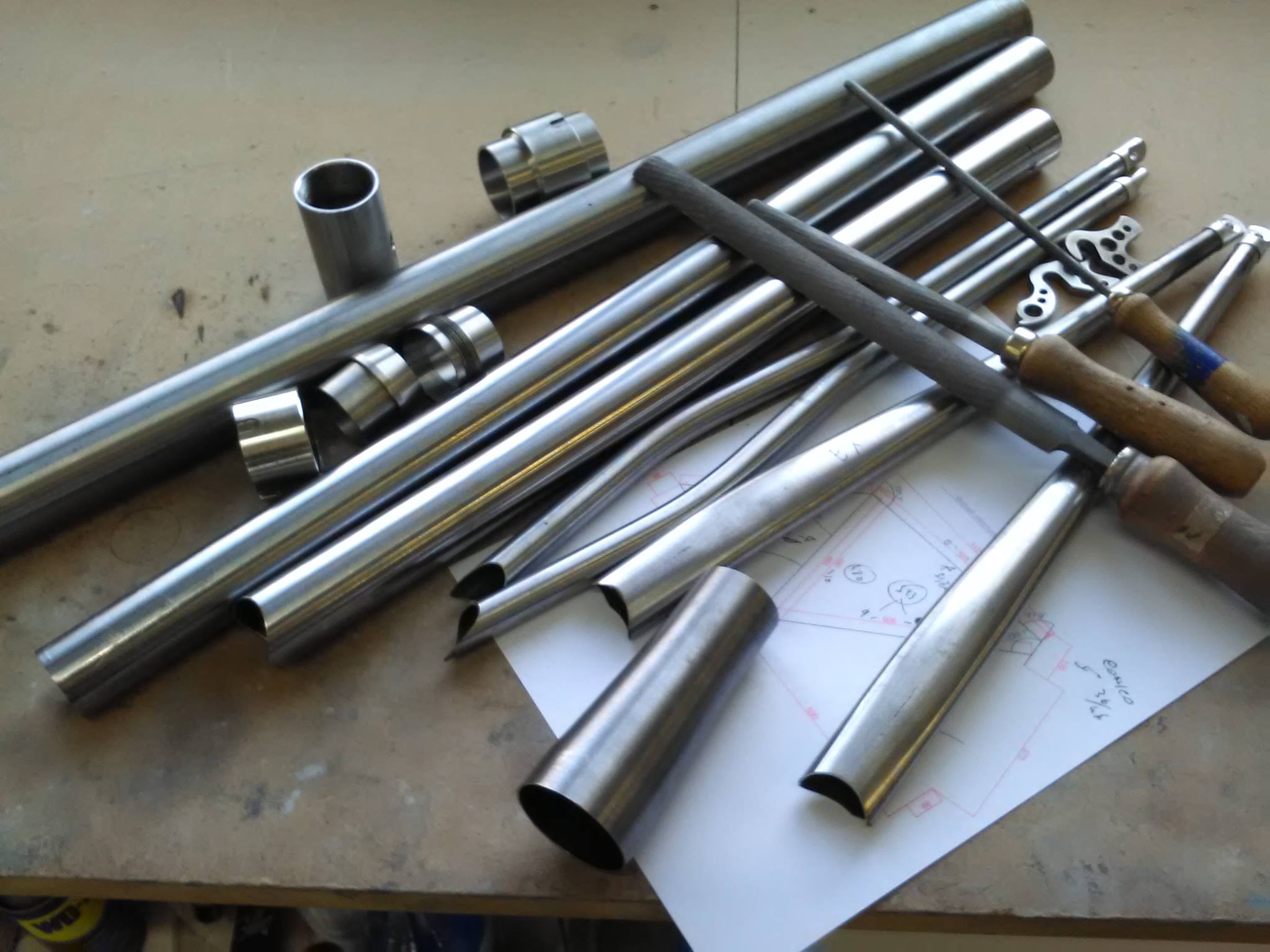
When does a custom frame make sense?
Custom is not always necessary—and in many cases, a well-chosen standard frame with a proper bike fit is more than enough.
- Unusual body proportions
- Recurring discomfort that adjustments can’t solve
- Very specific riding goals or disciplines
- Long-distance riding where small inefficiencies add up
- Riders who are particularly sensitive to position changes
Not all custom builders work the same way
It’s worth noting that “custom” doesn’t mean the same thing everywhere.
- Traditional approach: evolution of known geometries, strong focus on build quality and aesthetics
- Rider-focused approach: geometry derived from biomechanics and real riding posture

What riders actually notice on the road
When people switch to a well-designed custom bike, what they usually notice is not the “feel of steel”.
- Less fatigue over long rides
- More natural position on the bike
- Better balance between comfort and efficiency
A rider-centered approach to frame design
An increasing number of builders are moving toward a rider-centered design philosophy.
Forgione Telai follows this type of approach, focusing on steel frames designed around the individual rider rather than standard templates.
Learn more here:
https://www.steelframebicycle.com

Final thoughts
A custom steel frame is not simply an upgrade in material. It’s a different way of thinking about the bike.
The real value lies in how well the frame matches the rider—not in whether it’s made of steel, carbon or titanium.
For most riders, the key question is not “which material is better?”, but rather “does this bike actually fit how I ride?”
